Research from environmental psychology indicates that we develop an impression of a house in around 50 milliseconds after viewing it. This is faster than we could possibly be conscious of anything but it influences our view of the house even before we get to the doorstep. The face of a house bears all the burden of that impression: the material, color, scale, and light all work together.
I have seen many friends waste precious time over selecting colors while forgetting about other structural factors that really counted. The following is a guide to the material and style elements that matter.
Understanding What Shapes a Home Facade
Before you can decide on materials and colors, it’s useful to know more about what a facade is all about, besides its decorative function.
The Architectural First Impression
The facade consists of a thoughtful selection of materials, colors, windows, doors, roofing, and landscaping elements that together form the character of the home’s façade. Today, architects tend to see it as the environment’s interface, not just a decoration. It deals with light control, insulation, and ventilation, and at the same time expresses the owner’s taste and care. Such a double duty accounts for why the decision on a façade is so important for homeowners. The badly proportioned façade can spoil even a great house, whereas a carefully selected one can greatly enhance an average one.
Surprisingly enough, symmetry is another very important factor that adds to this. By matching windows and doors, you achieve a feeling of balance that the eye picks up almost immediately. The repetition of two or three different materials rather than five or six helps give it a more organized look. Depth is another very important element, and you do not need huge structures to achieve it. All you have to do is offset the wall plane, create an awning for the entrance or even cut the window out a little.
Facade Design and Long-Term Property Value
Exterior modifications always come on top when considering renovations that provide the greatest return on investment. Cost-versus-value reporting from the industry reveals siding replacement to generate about 69% ROI while a new front door generates more than 100%. Even a garage door that costs $10,000 can generate about $19,400 in resale value.
Choosing Materials for the Exterior
Material selection shapes both appearance and long-term maintenance demands. Getting this choice right means balancing aesthetics, climate, and budget together.
Traditional Options: Brick, Stone, and Stucco
Bricks and stones are still in high demand because they are durable and provide a classic appearance. Stucco is one of the most common materials for facades worldwide due to its affordability and texture variation possibilities. Clinker brick, which was invented in Northern Germany, is a combination of classic design and modern elements. The natural stone cladding acquires the best appearance with age because it acquires a rustic appearance that many people consider beautiful instead of outdated. Wooden siding is also warm; however, it requires much maintenance compared to the masonry. Such wood varieties as larch or oak can stand dozens of years without any finishing. Traditional materials are usually more appropriate in the areas where there is already architectural style because it can influence property value adversely. Some building authorities have their requirements regarding this issue, especially in the old buildings protected by law. It is always better to find out about them in order to avoid unnecessary redesign later on.
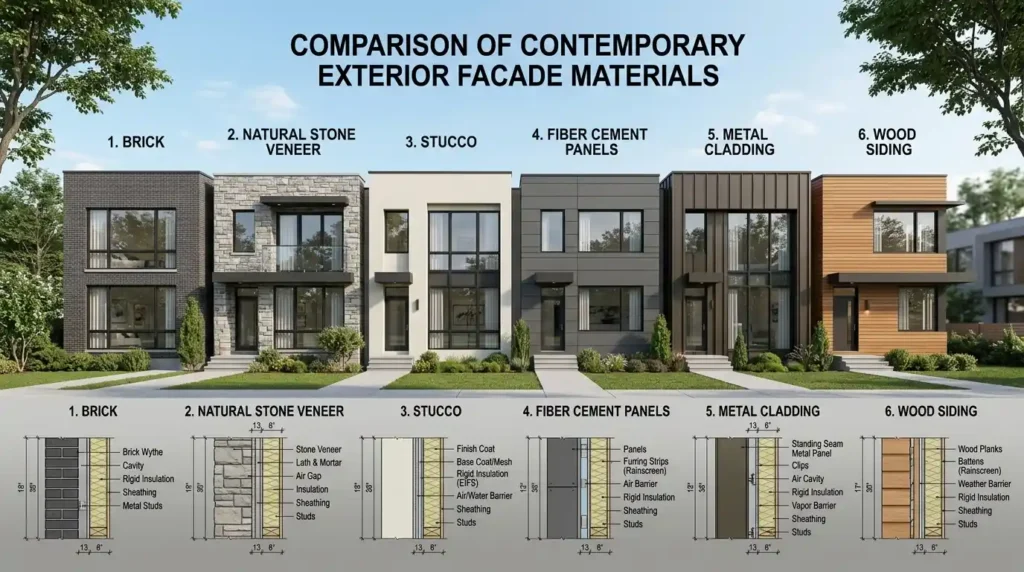
Modern Materials: Glass, Metal, and Fiber Cement
The glass facades or panels create an almost seamless transition between the interior and exterior spaces. The metal facade creates a sleek modern appearance that looks great when combined with other natural materials such as wood. One of the reasons why fiber cement cladding has become popular is due to its longevity.
Facade Styles Worth Considering
The style direction impacts all decisions going forward, including those about windows and light fixtures. If you select an appropriate direction early on, then the outcome will not be haphazard.
Minimalist and Contemporary Facades
In minimalist architecture, smooth roof lines and minimal trim, as well as limited use of monochromatic color choices, become prevalent. Wide openings with glass and large overhangs follow passive design rules, minimizing heating and cooling costs. This type of design works for people who love tranquility and elegance. Adding vertical elements, like wood planks or long groupings of windows, helps achieve an elongated form. High-contrast color schemes, where a light siding is combined with dark, sharp window frames, are popular in contemporary houses. This doesn’t mean that minimalism is about reducing the number of elements but that every element present has its purpose.
Farmhouse, Mediterranean, and Industrial Looks
Farmhouse facades rely on board and batten construction, understated hues, and welcoming scale. Mediterranean-influenced facades make use of stucco, stone features, and sunny hues. Industrial facades revive raw elements such as brick and black metal surfaces.
Color, Lighting, and Small Details That Elevate an Exterior
It is frequently the smallest finishing touches that make the most visual impact rather than the actual structure and materials chosen. The latter is usually also cheaper to change in retrospect.
Choosing a Color Palette That Ages Well
Earth tones are always safe choices, but bold contrasts have also gone mainstream. Dark exterior colors, such as charcoal, black, and navy, go well with greenery and are seldom outdated. Just one thing to consider is that the darker the paint color, the sooner it will fade, so you should expect to repaint the walls every 7 to 10 years instead of every 10 to 15 years. To make your architecture pop, try high-contrast combinations, such as cream siding with charcoal trim. Always try your color before deciding on it, because even swatches inside can give a wrong impression.
Lighting and Entryway Details
Uplights, wall lights, and pathway lights ensure that curb appeal lasts through the nighttime hours as well. A strong front door color scheme is one of the least expensive changes you can make, typically under $100 to make a great impact for the weekend. The house numbers, mailbox, and front porch lights must be the same material and colors.
Planning a Facade Renovation Without Costly Mistakes
A little planning prevents the most common and expensive facade regrets. Rushing straight into demolition rarely ends well.
Budgeting and Where to Spend First
Start with the most important and eye-catching items first, which include the front door, windows, and cladding material. You can leave less expensive items such as house numbers and planters to be considered later after you have made the major choices. It is important that you check beforehand if the project requires a building permit. It is common to spend money equally on all elements, but allocating the budget to a few elements can give better results in terms of appearance.
Visualizing the Exterior Before Committing
With the aid of AI, one can now upload a picture and visualize various materials or colors immediately. In doing so, there is no longer a disconnect between imagination and reality since there is less likelihood of making costly mistakes that result from rendering versus final product. It is still important to consult with an architect, particularly for more complex issues like proportions and construction.
Conclusion
When you have a facade that works, all these aspects the materials used, style, color and light work in harmony to create an overall, enduring impression. Concentrate on those factors that affect both the look and the future resale value of the house and leave the minor aspects to add after the major things have been sorted out.
Frequently Asked Questions (FAQs)
A front door paint job is one of the cheapest and most effective alterations, and the process rarely costs more than $100 to complete over a whole weekend.
Yes, because the former fade faster than the latter, it’s advisable to consider repainting within 7 to 10 years instead of 10 to 15.
The replacement of a front door and a siding upgrade belong to the high-ROI façade improvements.
No, considering how architects reduce your risks of making expensive mistakes that AI software won’t be able to detect.