At one point I assisted a friend in choosing the colors of her new siding. And we spent the whole day trying out different color combinations on her home. Viewing the colors at different times during the day. This experience showed me what most homeowners eventually discover the hard way. That a color that looks great on a sample square may look entirely different when viewed on an entire facade.
The choice of colors for siding on houses does not only influence the aesthetics of your home. But also its resale value and durability in the coming years. This guide is meant to help you find the best combinations of colors for your home.
How to Choose Colors for Siding for Houses in Any Style
However, choosing colors is not only about personal preferences; after all, there is more to consider here as well. The selected shades must be appropriate to your house’s architectural features, weather conditions and landscape. It is easier to decide on colors after considering all those things first.
Matching Color to Architectural Style
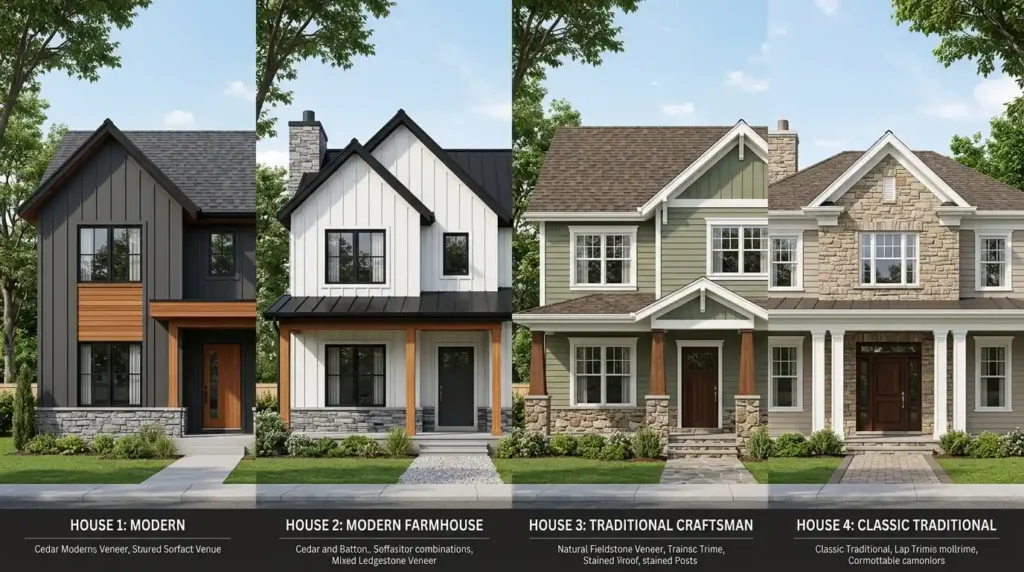
White colors or dark charcoal with black accents are commonly seen in modern farmhouses. Whereas craftsmen-style houses usually feature earthy tones. Darker colors, such as dark green and navy blue, suit traditional homes nicely. Especially when they are combined with white accents. Contemporary and transitional houses provide more options and are capable of successfully using unconventional colors. That would be unsuitable for a traditional home. Combining color purpose with architectural styles makes the overall appearance of the building look planned and not accidental. Which is what differentiates a well-organized house from an accidental-looking one.
Considering Climate and Energy Efficiency
The darker colors will absorb more heat, and therefore increase the cost of cooling in hot climates. While providing a slight edge in cold climates. The lighter color tones will reflect heat well. And at the same time hide the dust and some amount of fading. People in sunny areas need to consider this issue when deciding on whether to use a very attractive but expensive-to-cool color.
The Most Popular Neutral Siding Colors Right Now
Neutral colors continue dominating siding choices nationwide, and for good reason. They offer broad appeal, age gracefully, and pair easily with almost any trim or roofing choice.
Whites, Off-Whites, and Creamy Neutrals
The classic white will always stay in trend, and this color alone can take up a considerable percentage of the market share. The soft off whites, creamy and ivory colors serve as alternatives that are warmer and at the same time do not depart from the timeless appeal of classic white. These colors also tend to be more fade-resistant compared to the pure white color after many years of exposure to the sun’s rays.
Grays, Greige, and Charcoal Tones
Greige, as an intermediary mix of gray and beige, is one of those neutrals that provides a true compromise and fits many different architectural designs. Charcoal gray is another trend to watch; it brings an element of modernity to a design scheme without being trendy and thus avoiding temporary solutions. Such gray neutrals are usually quite timeless in their appearance, and that may become very important when you intend to live in your house for decades to come. Another advantage of dark gray colors is their safety factor when introducing boldness.
Bold and Nature-Inspired Color Trends
Even though neutrals prevail in general, many homeowners are opting for bolder, nature-inspired color palettes. These are especially suitable when used on houses that are surrounded by natural landscaping.
Greens, Blues, and Earthy Tones
The shades sage and olive green have become increasingly popular, particularly for homes surrounded by wooded landscapes, as the color blend harmonizes with nature. The colors smoky or muted navy blue would be great for homes near water, as it creates a sense of tranquility around water. The shades of wood browns and terracotta create a southwest rustic look that is especially suited for stone or brick houses.
Two-Tone and Color-Blocking Combinations
The use of two tones of paint, which entails creating an accent using a different color from the primary one, is gradually gaining popularity as an effective way to make homes stand out through color contrast. Color blocking, which involves the use of colors in the form of gable stripes such as farmhouse red-and-white, provides for a great look, while still keeping the exterior colors limited. The use of gray, navy blue, and white creates a sophisticated look as well.
Pairing Siding Color With Trim, Roof, and Accents
The siding color almost never stands on its own. Rather, it functions in tandem with other aspects of the house’s facade, such as trim and roof. Making all of these pieces fit together is as important as the actual siding color.
Trim and Window Frame Choices
Trim basically serves the purpose of framing your house the way that the picture frame frames an artwork, hence, making the choice of the right type quite important. The black trim has gained much popularity lately due to its ability to define and add more curb appeal to your house. The white trim is the standard type.
Roof Color and Material Coordination
Matching siding to the roof color will ensure that there is no clashing on the outside. Gray or charcoal-colored roofing goes well with weathered wood or charcoal-colored siding, and warm wood-looking siding will complement earthy-colored roofs more. Carefully considering this matching prior to making the final decision will save you from the expense of future remodeling.
Practical Tips Before You Commit to a Color
Even the most popular color trend can disappoint if you skip a few practical steps beforehand. These final considerations protect you from an expensive mistake.
Testing Samples in Natural Light
It is always advisable to see siding samples in the outdoors under both the sun and shadow, because seeing the samples inside will never give you an idea about the way colors look like in reality. Color changes during the course of the day, and it makes sense to check samples early in the morning and later on in the evening. This is how one gets disappointed after having the siding installed.
Fading, Maintenance, and Resale Value
Pale colors are usually more effective in disguising wear and tear and the effects of dust compared to darker colors. Traditional colors have been seen to preserve the resale value of items compared to the new fad colors because they suit many more people. Making an assessment of your preferences relative to the long-term practical issues results in a choice that you are not likely to regret after five years.
Conclusion
Selecting the colors for siding on homes is all about finding the right balance between your personal preferences and the architecture, weather, and practicality of the home. Neutral shades such as white, greige, and gray are always safe options, while green, blue, and other earth tones provide an interesting option for those who want something more unique in their home. Try out your favorites outside, match them up well with the trim and roof, and you will find the perfect color!
Frequently Asked Questions
What is the most popular siding color at the moment?
Although classic white is still very much in use, charcoal gray and greige have become increasingly popular in recent years. However, which one is the best choice depends on architecture and personal preference.
Does darker siding color fade faster than lighter?
Generally speaking, more saturated and dark colors tend to fade faster than light neutral colors, and therefore light colors are recommended for siding if you want something that will last long and require little maintenance.
How do I pick siding colors to match my roof?
Grays and charcoals work great with weathered wood or gray roofs, whereas earthen siding colors should match warm roofing colors. It is possible to test sample pieces outdoors to ensure the right match.
Should I go for a trendy color or a timeless one when considering resale value?
Trendy colors may not be the best choice if you think about resale value, as timeless colors are usually more popular with a larger number of potential buyers.