One of my friends deliberated for many months on whether to sacrifice her hallway closet for an elevator shaft. It wasn’t until her contractor suggested something that she didn’t consider once that the issue was sorted out. Building outside of the house rather than inside provided the solution to her space issue instantaneously. And it was only then that she realized how simple the solution was right before her eyes.
An outdoor home elevator provides homeowners with the opportunity. To make their houses more accessible without giving up even an inch of indoor living space. This article will explain to you how outdoor elevators are different from their interior counterparts. How much they cost, and which safety features are truly necessary when building outside.
What Is an Exterior Home Elevator, and Who Needs One
In other words, such an elevator creates its shaft right outside on the wall of the house. Rather than creating space within one of its rooms. The entry into the elevator may be located inside, outside. Or even both places depending on the preference of the homeowner as to how he or she would like to travel between different floors.
How Exterior Elevators Differ From Interior Models
Interior elevators will have to sacrifice some space for installing an elevator. Usually one closet or even a room, along with cutting out a pit underneath the building’s foundation. When installing the elevator exteriorly, there is little need for such changes. Since the whole shaft of the elevator will be installed outside of the current building’s perimeter. The plumbing, duct work, and wiring system are not affected by installing an elevator. Thus reducing installation costs and effort for many people. However, an exterior cabin requires a roof of its own.
Common Reasons Homeowners Choose Outdoor Installation
The concept of aging in place plays a significant role here, as homeowners would like to remain in their multi-story houses without having to climb the stairs every day. Coastal property owners will also derive huge benefit from it, as the high levels found in flood-prone regions make stairs an inevitable feature of house entryways. Some families just require an easy method of bringing their groceries, bags, and beach supplies upstairs from the garage. In whatever situation, the external approach is most likely to attract such families.
Key Benefits of Adding an Exterior Elevator
Apart from the space problem, this system offers several additional benefits that are not always considered by homeowners when they begin the process. Knowledge of these benefits is important to determine the feasibility of the project for your unique case.
Preserving Interior Square Footage
Each square inch in your house counts, and giving up a closet or a small room for an elevator shaft is not something most people will take lightly. Installing an elevator off the house does not involve compromising on such precious areas because the whole system is outside your current structure. People with limited spaces at their disposal or historic buildings find this reason more than enough to make up their minds.
Boosting Curb Appeal and Property Value
Despite popular opinion, an exterior elevator does not have to clash with the aesthetics of a home’s exterior. In fact, through clever design choices and careful selection of materials that harmonize with the current architecture of the house, the elevator can actually enhance the look of your property. More and more realtors are beginning to realize that accessible elements such as elevators can actually be worth money when it comes time to sell. This is good news for homeowners intending to stay put for years to come.
Cost, Size, and Weight Capacity Considerations
Pricing and dimensions vary considerably across manufacturers, so it helps to understand realistic ranges before requesting quotes. These numbers give you a starting point for comparing options.
Typical Pricing and What Affects It
The basic models of outdoor lifts may cost roughly $8,650, although exact prices depend largely on the travel height, cabin space, and other factors. The price of an outdoor lift is usually higher than that of an indoor one due to the additional roof and completely sealed walls required for the structure. Travel height plays an important role as well since there are lifts with a 27-foot travel height sufficient for two- to three-story buildings.
Hoistway Dimensions and Cabin Sizes
Small elevators may call for a completed hoistway that is about 54 by 42 inches, while large elevators will call for a space of more like 60 by 60 inches. The overall amount of space used on each floor will be less than 15 square feet. As with the space measurements, the weight capacity will depend on the particular unit but can often accommodate multiple hundreds of pounds.
Weatherproofing and Safety Features
Because the cabin is directly exposed to the elements, material and safety concerns are of greater significance in this scenario than they would be for an interior installation. Cutting corners with either will reduce the longevity of the equipment significantly.
Materials Built for Coastal and Harsh Climates
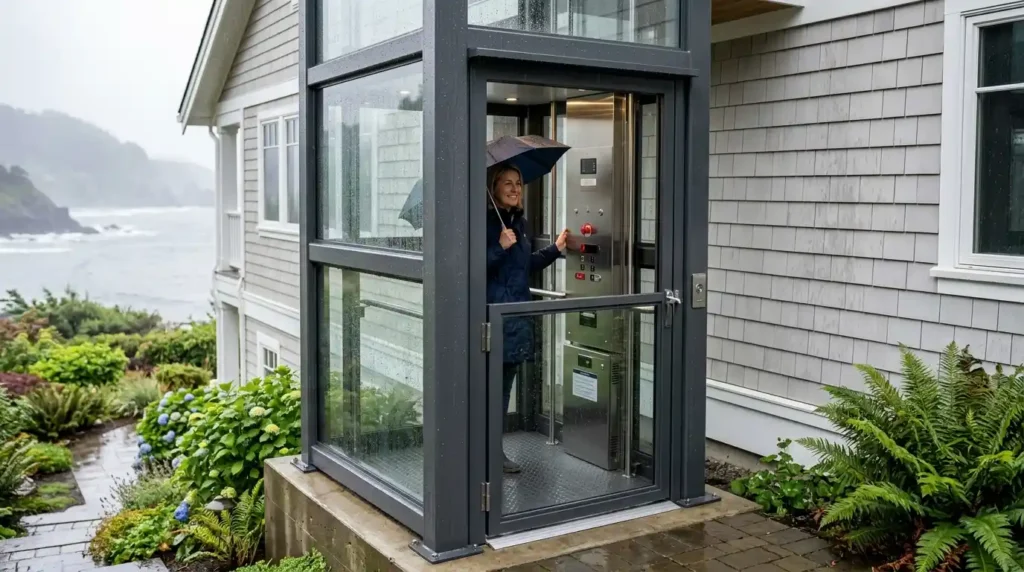
The aluminum frames and stainless steel cables are resistant to corrosion in a way that is much more durable than ordinary steel parts, which are likely to corrode after a period of only one or two years in the presence of seawater. The electrical parts being airtight ensure the controls operate effectively under rain, heat, and cold temperatures without many failures. Houses that experience hurricanes need to go for hurricane systems since they have been made with more structural integrity in mind. If well made, the system may work effectively for up to 15 to 25 years.
Safety Systems That Matter Most
The emergency button, slack cable brake, and back-up power in case of a sudden malfunction or power failure provide additional layers of protection from accidents that can arise from sudden system failures or power interruptions. The non-slip flooring and safety gates minimize the risk of falling, which is of great importance for senior citizens or people with reduced mobility. Constant pressure controllers ensure that the machine only moves when pressure is maintained on the control button.
Choosing the Right Elevator Type and Installer
All exterior lift options aren’t created equal, and choosing the right category is just as important as choosing the right brand. The right installer will be able to assist in making the right choice for your specific requirements.
Vertical Platform Lifts vs Enclosed Elevators
Vertically mounted platform lifts provide a relatively inexpensive and outdoor solution for traveling short distances such as a single staircase. However, the enclosed elevator offers a completely weather-resistant compartment that is more appropriate for higher elevations and stories. Selection will always come down to budget constraints, travel distance, and how much protection from the elements one desires.
Working With an Architect and Certified Dealer
Having a consultation with an architect or a general contractor early on will guarantee that all structural and code specifications will be met throughout the whole process. An authorized dealer can also provide planning manuals which contain information about pit depths, electrical specifications, and dimensions needed for the installation. Failure to do this often results in costly remodeling midway through the project.
Conclusion
When it comes to choosing between a home exterior lift versus building an interior lift, this can depend on saving room, complementing the look of your house, and weather conditions. The cost, size, and safety features will depend on the manufacturer, and that is why comparing different quotes makes sense. These lifts give you real access without changing your existing rooms.
Frequently Asked Questions (FAQs)
Budget models begin from about $8,650, although the price depends on the height of ascent, cabin dimensions, and the state of affairs. Several offers allow comparison of the realistic prices for you particular house.
They require less modification than inside installations, as the shaft will be placed outside your walls and is likely not to involve plumbing and electricity routing. But still the structure will require foundation, roof, and waterproofing walls.
With high-quality materials and proper care, an average lifespan of an outdoor elevator lies within 15-25 years. However, salt water and high humidity may shorten the period in case of using low-quality construction.
There is the difference. Vertical platform lift is open and more suitable for shorter routes. While the second type is enclosed and protected from bad weather conditions.