The weather in New York is not known for being moderate. Hot summer weather turns into extremely humid, while winter comes with biting cold and heavy snowfall. Coastal weather can bring some serious weather conditions as well. Any researcher looking at DIY home security systems New York weather conditions understands. That a camera designed for milder California climate may not last through a season of winters in Brooklyn.
In my case, it happened when an inexpensive outdoor camera fogged up completely after just one humid week of summer. This guide includes information about IP rating. Types of cameras that will be able to withstand all seasons of weather. Installing techniques that will work with city dwellings and maintenance. That will ensure good performance throughout the year.
DIY Home Security Systems New York Weather Challenges to Know First
Before choosing any camera, it helps to understand exactly what New York throws at outdoor electronics throughout the year. The state’s weather swings dramatically between seasons.
Cold, Snow, and the Freeze Thaw Cycle
The temperature during winter season in most areas of New York falls below 14 degrees Fahrenheit. Which affects the normal functioning of cameras since the cold makes them less efficient. At these low temperatures, frost and ice formation becomes an issue. It will freeze up directly to the lenses, thus making the cameras unable to record any video. It is also important to note that frequent freeze and thaw make seals to break. And the internal structures of the cameras to wear off during the long period.
Snow can add weight to the cameras, causing them to tilt or even crack if they are poorly placed. Nor’easter winter storms bring powerful winds, snow, and ice that can put even highly rated outdoor equipment to the test. For those who have experienced such a storm before, they know how unpredictable they are. Batteries are affected greatly by cold because lithium-ion batteries are less efficient below freezing point.
However, a camera that has weatherproof capabilities does not mean it can handle the elements in cold weather. Companies separate both, and many people find out the hard way that a camera advertised to be weatherproof cannot handle the cold weather after using it on the first cold spell that comes around. It is important to note the actual temperature range that the camera will work at rather than the IP rating only. The upstate area experiences even more extreme weather compared to the city, including lower temperatures and higher snowfall amounts.
Humidity, Fog, and Summer Storms
The summer season presents its problems as well, mainly the presence of humidity, which results in foggy lenses. Thunderstorms check the water-resistant capabilities just as effectively as snow checks the freezing-resistance capability. When warm, moist air comes into contact with the cold camera, particularly in the morning, it creates the same foggy effect as frost does in winter. Therefore, an effective solution would need to be prepared for any extreme, not for only one season. When homeowners expect winter but get summer humidity, they realize that their videos are blurry at the peak of the burglar season.
Choosing the Right Camera for New York’s Weather
Camera selection matters more here than in milder climates. A few key specifications separate cameras that survive from ones that fail within a season.
Understanding IP Ratings and Temperature Ranges
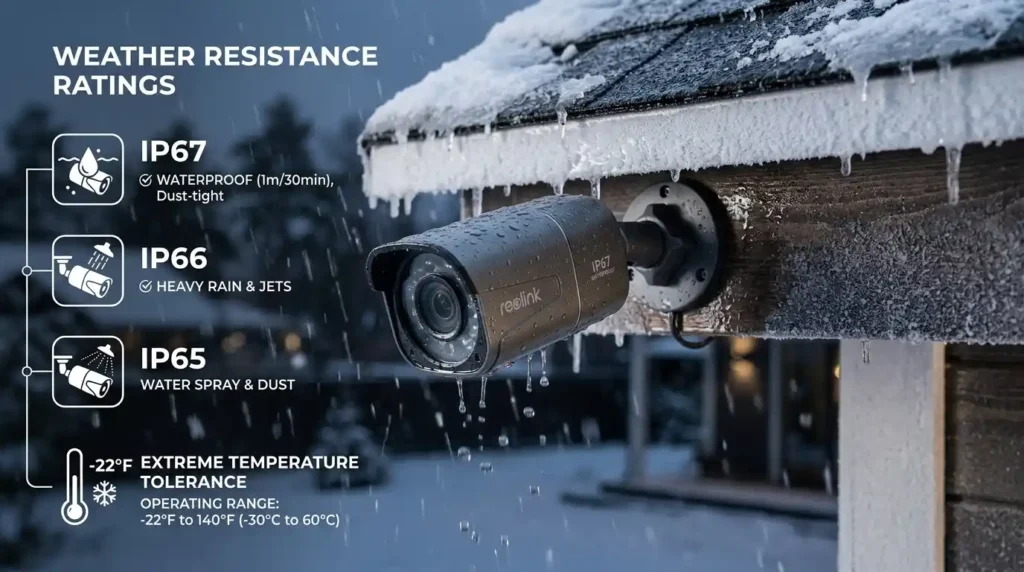
It’s best to choose a camera with at least an IP65 rating, though IP66 or IP67 models provide even stronger protection against heavy rain and snow. In an IP rating, the first number signifies the level of dust protection while the second number indicates the level of liquid protection. It is imperative that you check whether the temperature range of the camera goes well below the freezing point with an ideal of -22°F and below. Wired cameras function much better than those which run on batteries in extremely low temperatures because they have a constant flow of power and do not have to worry about draining batteries. In case you go for battery-operated cameras, ensure that you use lithium batteries which hold charges significantly better than normal alkaline ones in low temperatures. Do not go by marketing terms such as ‘weatherproof’ or ‘all-weather’.
Wired vs. Wireless vs. Solar Options
The wired cameras give the most reliable performance throughout all seasons in New York but require cable installation. Wireless cameras make the installation process easy and can be especially beneficial to the tenants since they cannot bore holes through the brownstones. Solar cameras are also efficient in function, although they should be oriented towards the low winter sun in order to have sufficient power. You should remember that due to the shorter daylight hours during winter, the solar cameras may require an additional battery for operation in case of bad weather.
Installing Cameras for New York Homes and Apartments
City housing brings its own installation quirks beyond just weather. Brownstones, co-ops, and apartment balconies all present unique constraints.
Mounting Considerations for Brownstones and Apartments
Installing a camera beneath the eave or awning helps prevent it from being subjected directly to snow and rainfall. This installation technique alone can help prolong the life of your camera in extreme weather conditions by quite a bit. Be sure to find out if there are any restrictions in place regarding drilling holes into the brickwork of the building you live in. Co-ops frequently forbid any alterations to the building’s exterior, so an alternative that is wireless and adhesive-mounted may be more appropriate for a balcony setting. The high-rises present another complication your coverage ends at the exterior of your unit, so that is as far as the camera goes. In a ground-floor brownstone apartment, having the camera covering the stoop and entrance works best.
Cable Management and Burial Depth
Bury cables 18 to 24 inches underground to ensure that they stay out of the frost level in New York. Heat tapes that are self-regulating can help keep the cable safe from freezing and cracking on the surface in extremely cold temperatures.
Maintaining Your System Through All Four Seasons
Even the best equipment needs regular attention as seasons change. A little maintenance prevents most weather-related failures before they happen.
Winter Upkeep and Storm Recovery
Following snowfall, it is recommended to brush the accumulation of snow off of the camera housing with a soft brush rather than using a scraper. Hot water should not be used as well as scrapers on the icy lens due to possible damage because of the abrupt change in temperature. The use of a microfiber cloth dampened with lens cleaner helps remove frost from the lens without causing any harm. Following a significant weather event, camera housing alignment and live stream should be tested along with checking the housing for any cracks or moisture entering the housing. This should be part of the after-storm procedures along with other activities such as sidewalk cleaning and roof inspection.
Year Round Habits That Extend Camera Life
The use of hydrophobic coatings on the lens from time to time reduces lens fogging especially during humid periods in summer. In addition, keeping the camera out of heat ducts ensures that there is no lens fogging due to condensation.
Conclusion
DIY home security system planning in New York requires a focus on the real cold weather ratings, appropriate mounting locations, and regular maintenance. If you get this done correctly, your cameras will continue to function through snow, wet summers, and all other seasons. Just some basic research up front can prevent a lot of wasted money later.
Frequently Asked Questions (FAQs)
At least IP65 is advisable, although IP66 or IP67 provides a higher level of protection against the heavy snow and precipitation typical of the area.
Suitable but not optimal because lithium batteries operate better in the cold than regular ones. Also, wired security cameras are more dependable.
Yes, but verify the building regulations because most co-ops prohibit any kind of alteration, so wireless and adhering security cameras are preferred.
Use hydrophobic and anti-fog treatments on lenses and keep away from vents where moisture mixes with cold air.